
How to Choose the Right Beam Angle (15° vs 24° vs 36°)
Beam angle is one of the most important yet misunderstood aspects of lighting design. Choosing the wrong beam angle can result in glare, uneven lighting, or poor visual impact—even when high-quality fixtures are used.
This guide explains beam angle in lighting, compares 15° vs 24° vs 36°, and helps you choose the right spotlight or wall washer beam angle for architectural and interior lighting projects.
What Is Beam Angle in Lighting?
Beam angle refers to the spread of light emitted from a lighting fixture, measured in degrees (°).
- Narrow beam = concentrated light
- Wide beam = spread-out light
Beam angle directly affects:
- Light intensity
- Focus and highlighting
- Visual comfort
- Architectural impact
In architectural lighting design, beam angle selection is just as important as fixture placement.
Why Beam Angle Matters in Architectural Lighting
Correct beam angle selection ensures:
- Proper highlighting of objects and surfaces
- Uniform wall illumination
- Reduced glare and light spill
- Efficient use of lighting fixtures
Using the wrong beam angle can flatten textures, create hotspots, or waste light.
Understanding Common Beam Angles
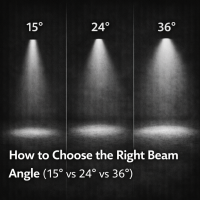
15° Beam Angle – Narrow & Focused
A 15° beam angle produces a tight and concentrated beam of light.
Best used for:
- Artwork and sculptures
- Feature objects
- Decorative highlights
- High-end accent lighting
Key characteristics:
- High intensity
- Strong contrast
- Dramatic visual impact
Overuse of 15° beams can cause glare if not positioned correctly.
24° Beam Angle – Balanced Accent Lighting
A 24° beam angle offers a balance between focus and spread.
Best used for:
- Accent lighting on walls
- Furniture highlights
- Niches and textures
- Architectural details
Key characteristics:
- Controlled light spread
- Softer than 15°
- Versatile for residential interiors
24° is one of the most commonly used beam angles in luxury homes.
36° Beam Angle – Wider & Softer Illumination
A 36° beam angle provides broader and more uniform illumination.
Best used for:
- Wall washing
- General accent lighting
- Feature walls
- Corridors and passages
Key characteristics:
- Soft and even light
- Reduced hotspots
- Comfortable visual experience
36° beams are ideal where subtle highlighting is required.
Spotlight Beam Angle Guide
Recommended beam angles by application:
- Artwork / objects: 15°
- Accent lighting: 24°
- Wall washing: 36°
- Corridors: 36°
- Decorative highlights: 15°–24°
Choosing the correct spotlight beam angle ensures design intent is achieved without visual discomfort.
Wall Washer Lights and Beam Angles
Wall washer lights are designed to evenly illuminate vertical surfaces.
Key considerations:
- Wider beam angles (30°–60°)
- Uniform light distribution
- Correct distance from the wall
36° beam angle fixtures are commonly used for wall washing in residential and commercial projects.
Common Beam Angle Mistakes to Avoid
- Using narrow beams for general lighting
- Overlapping tight beams causing hotspots
- Ignoring ceiling height and distance
- Mixing beam angles randomly
Professional lighting design avoids these mistakes through careful planning and calculations.
Beam Angle Selection in Luxury Homes
In luxury architectural lighting:
- Narrow beams create drama
- Medium beams add depth
- Wide beams ensure comfort
A layered combination of beam angles creates balanced and sophisticated lighting environments.
Professional Lighting Design by Anjora Lighting
Anjora Lighting specialises in architectural and technical lighting design for residential and commercial projects.
We help clients:
- Select the correct beam angles
- Design glare-free lighting layouts
- Balance accent and ambient lighting
- Achieve architectural precision
Every beam angle is selected with purpose—not guesswork.