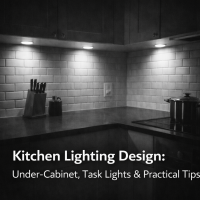

Kitchen Lighting Design: Under-Cabinet, Task Lights & Practical Tips
Kitchen lighting design is one of the most important yet often overlooked aspects of home interiors. A well-lit kitchen is not just about brightness—it is about visibility, safety, comfort, and efficiency.
This guide explains the best kitchen lighting design practices, focusing on under-cabinet lighting, task lighting, and practical tips specifically suited for Indian kitchens.
Why Kitchen Lighting Needs Careful Planning
The kitchen is a high-activity workspace. Poor lighting can lead to:
- Shadows on countertops
- Eye strain during cooking
- Safety risks while chopping and handling appliances
Good kitchen lighting ensures:
- Clear visibility on work surfaces
- Comfortable and glare-free illumination
- A clean, modern look
Key Principles of Good Kitchen Lighting Design
An effective kitchen lighting plan should be:
- Bright but not harsh
- Shadow-free on work areas
- Easy to maintain
- Energy efficient
Kitchen lighting should always be function-first, followed by aesthetics.
Task Lighting: The Most Important Layer in Kitchens
Task lighting focuses on areas where work is performed.
Where task lighting is needed:
- Kitchen countertops
- Sink areas
- Cooking and prep zones
Task lighting ensures accuracy, safety, and ease while cooking.
Under-Cabinet Lighting: A Kitchen Essential
Under-cabinet lighting is one of the most effective kitchen lighting solutions.
Benefits of under-cabinet lighting:
- Eliminates shadows on countertops
- Provides focused task illumination
- Enhances kitchen aesthetics
Best options for under-cabinet lighting:
- LED strip lights
- Slim linear LED profiles
Neutral white lighting (3500K–4000K) works best for under-cabinet applications as it provides clarity without harshness.
Ceiling Lighting for Kitchens
Ceiling lights provide overall ambient lighting.
Best ceiling lighting options include:
- Recessed downlights
- Surface-mounted fixtures
- Minimal ceiling profiles
Downlights should be placed carefully to avoid casting shadows directly on worktops.
Recommended Color Temperature for Kitchen Lighting
Choosing the right color temperature is crucial.
Ideal color temperature:
- Neutral White (3500K–4000K)
This range:
- Shows true food colours
- Improves visibility
- Keeps the kitchen feeling clean and fresh
Warm white lighting is generally avoided on primary work areas.
Practical Kitchen Lighting Tips
1. Avoid Single Central Lights
A single ceiling light creates shadows. Always layer ceiling and task lighting.
2. Keep Lights Close to Work Areas
Under-cabinet lights should be positioned near the front edge of cabinets to reduce shadows.
3. Use Separate Switching for Task Lights
Independent controls allow users to turn on only the required lights, saving energy.
4. Choose Easy-to-Clean Fixtures
Kitchen lighting fixtures should resist dust, oil, and moisture.
5. Ensure Proper Driver & Wiring Design
Correct power supply selection avoids flickering and voltage drop in LED strips.
Common Kitchen Lighting Mistakes
- Relying only on ceiling lights
- Using warm white light on countertops
- Poor placement of downlights
- Ignoring under-cabinet lighting
These mistakes affect both functionality and comfort.
Modern Kitchen Lighting Trends in India (2026)
- Continuous under-cabinet LED profiles
- Neutral white task lighting
- Minimal recessed fixtures
- Energy-efficient LED systems
- Smart switching and dimming
These trends focus on efficiency and clean design.
Kitchen Lighting Design by Anjora Lighting
Anjora Lighting specialises in functional and modern kitchen lighting design for Indian homes.
Our services include:
- Kitchen lighting layout planning
- Under-cabinet and task lighting solutions
- LED strip and profile lighting design
- Energy-efficient and glare-free systems
We design kitchens that are practical, safe, and visually refined.