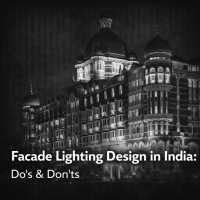

Facade Lighting Design in India: Do’s & Don’ts
Facade lighting design plays a crucial role in how a building is perceived—especially at night. In India, where climate, dust, heat, and urban context strongly influence design, facade lighting requires careful planning and technical expertise.
This guide covers the do’s and don’ts of facade lighting design in India, helping architects, developers, and homeowners create visually striking yet practical exterior lighting solutions.
What Is Facade Lighting Design?
Facade lighting design focuses on illuminating the exterior elevation of a building to enhance its architectural character after dark.
Its purpose includes:
- Highlighting architectural elements
- Creating night-time identity
- Improving visibility and presence
- Adding prestige and value
Facade lighting is commonly used for residential buildings, hotels, commercial complexes, and landmarks across India.
Why Facade Lighting Needs Special Attention in India
Indian conditions present unique challenges for exterior lighting design:
- High dust and pollution levels
- Heat and humidity
- Power efficiency requirements
- Dense urban surroundings
A successful facade lighting design balances aesthetics, durability, and efficiency.
Do’s of Facade Lighting Design
1. Do Highlight Architectural Features
Use light to enhance columns, fins, textures, and structural details instead of flooding the entire facade with light.
Focused lighting creates depth and elegance.
2. Do Use the Right Beam Angles
Select beam angles based on surface size and distance:
- Narrow beams for details
- Medium beams for accents
- Wider beams for wall washing
Correct beam angles prevent hotspots and uneven illumination.
3. Do Choose Appropriate Color Temperature
Warm white lighting (2700K–3000K) works best for most Indian facades, especially residential and hospitality projects.
Neutral white (4000K) may be used selectively for contemporary or commercial buildings.
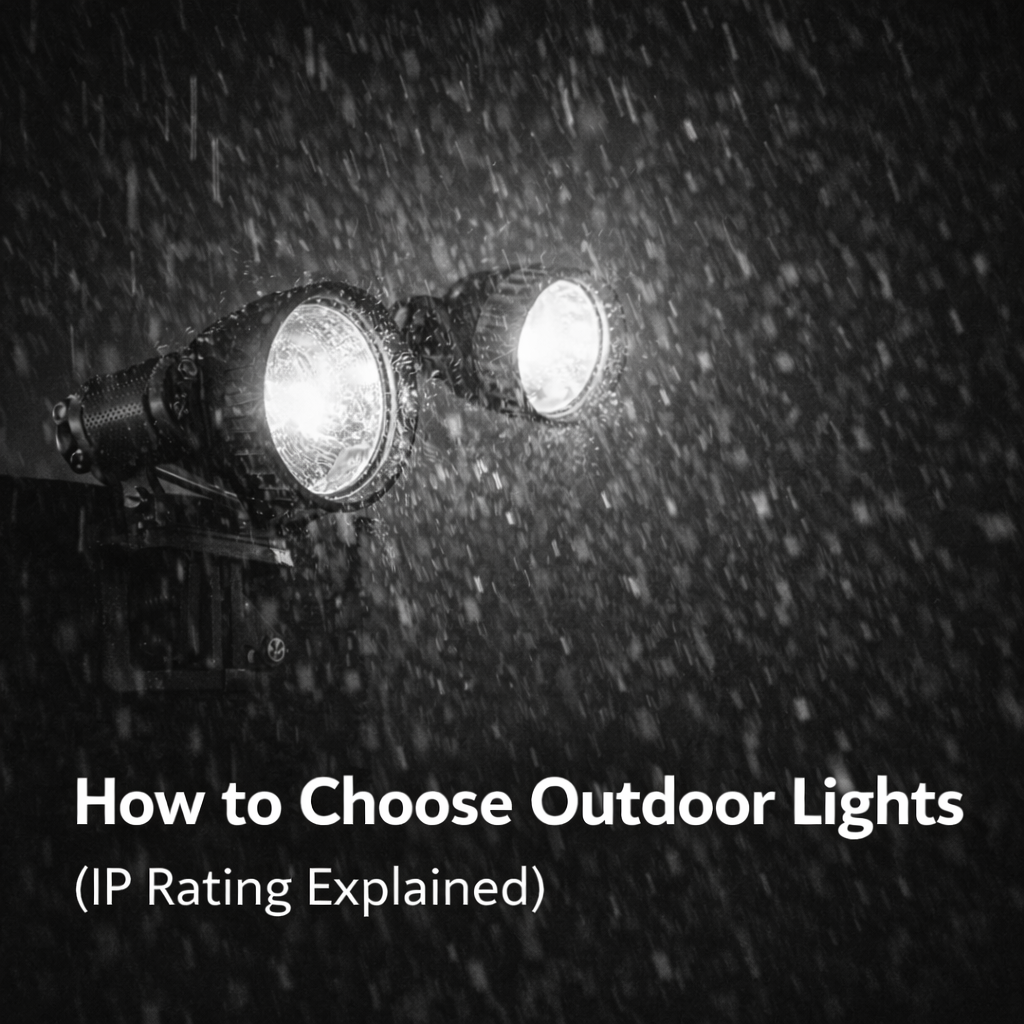
4. Do Use Outdoor-Rated Fixtures
Always use IP-rated lighting fixtures suitable for Indian outdoor conditions.
- IP65 or higher for exposed areas
- Corrosion-resistant materials
- Proper heat management
This ensures long-term performance and safety.
5. Do Integrate Lighting with Architecture
Facade lighting should be planned along with architectural design—not added later.
Early coordination ensures:
- Hidden fixtures
- Clean elevations
- Better visual outcomes
Don’ts of Facade Lighting Design
1. Don’t Over-Light the Facade
Excessive brightness destroys architectural character and causes glare.
Facade lighting should highlight—not overpower—the building.
2. Don’t Mix Too Many Light Colors
Avoid using multiple color temperatures or RGB lighting unnecessarily.
In most cases, a single warm tone creates a more premium and timeless look.
3. Don’t Ignore Light Pollution & Glare
Poorly aimed lights can spill into neighboring properties or the night sky.
Always use proper shielding and accurate aiming to control glare and light spill.
4. Don’t Use Indoor Fixtures Outdoors
Indoor lights are not designed to handle rain, dust, and heat.
Using them outdoors leads to frequent failures and safety risks.
5. Don’t Treat Facade Lighting as Decoration Only
Facade lighting is architectural—not decorative.
It should respect building proportions, materials, and context rather than relying on flashy effects.
Building Elevation Lighting: Best Practices
Effective building elevation lighting focuses on:
- Vertical illumination
- Shadow and depth creation
- Material texture enhancement
- Controlled brightness
Well-designed elevation lighting gives buildings a refined and iconic night-time presence.
Common Facade Lighting Mistakes in India
- Floodlighting the entire building uniformly
- Using cool white lighting for residential facades
- Visible and poorly placed fixtures
- Ignoring maintenance access
These mistakes reduce both aesthetics and long-term performance.
Role of a Lighting Consultant in Facade Lighting
A professional lighting consultancy ensures:
- Proper lighting concept development
- Technical fixture selection
- Beam angle and lux-level control
- Energy-efficient exterior lighting design
Facade lighting benefits greatly from expert planning and execution.
Facade Lighting Design by Anjora Lighting
Anjora Lighting is a specialised lighting consultancy firm offering facade lighting design solutions across India.
Our services include:
- Architectural facade lighting design
- Building elevation lighting planning
- Exterior lighting solutions
- Energy-efficient and durable systems
We design facade lighting that enhances architecture while respecting context and sustainability.